
By Eloge Willy Kaneza
The Banyamulenge diaspora has mobilized across North America to call international attention to what it describes as a deliberate and deadly blockade imposed on Banyamulenge villages in the highlands of South Kivu, eastern Democratic Republic of Congo (DRC). The diaspora says that the Burundian army, Wazalendo militias, and the Armed Forces of the Democratic Republic of the Congo (FARDC) are behind the blockade.
The Mahoro Peace Association, a U.S.-based organization composed primarily of Banyamulenge members, estimates that over 13,000 members of the Banyamulenge community currently reside in the U.S.
Marching for humanity
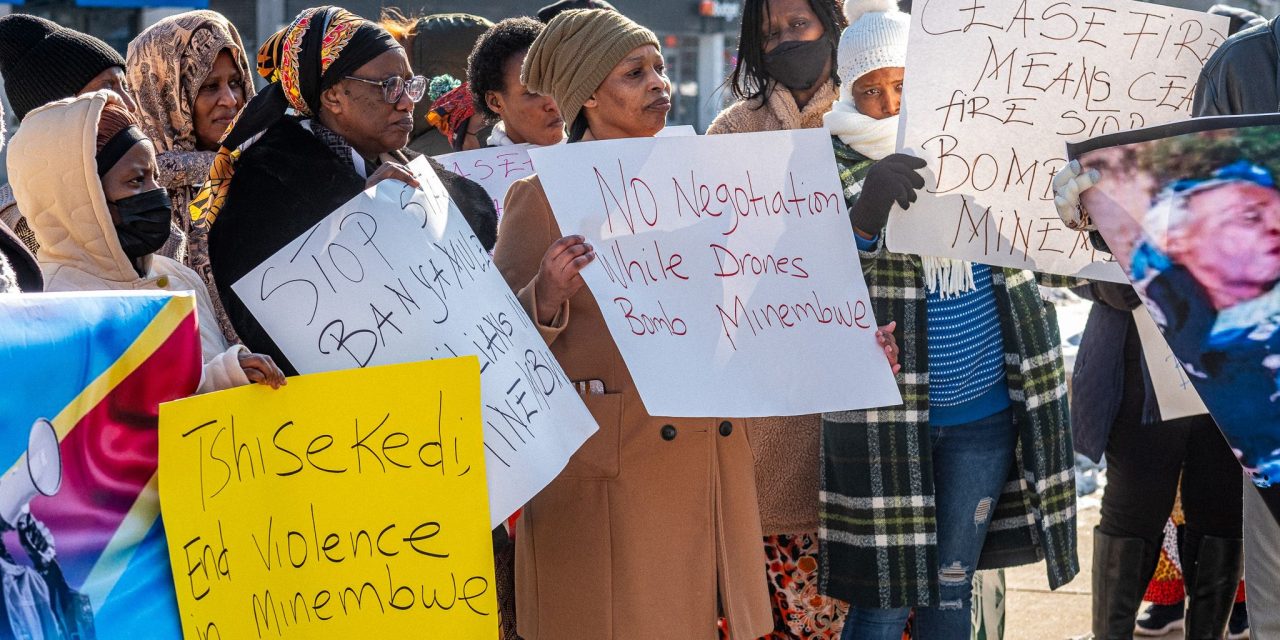
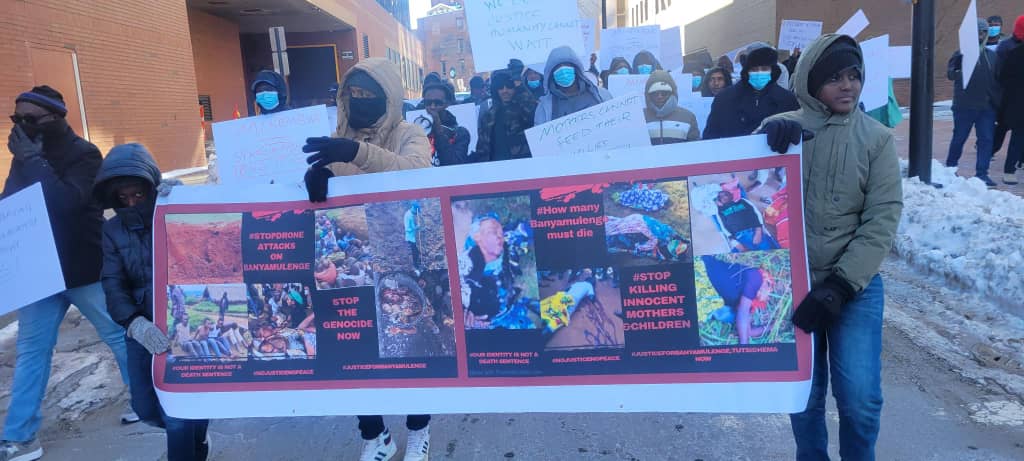
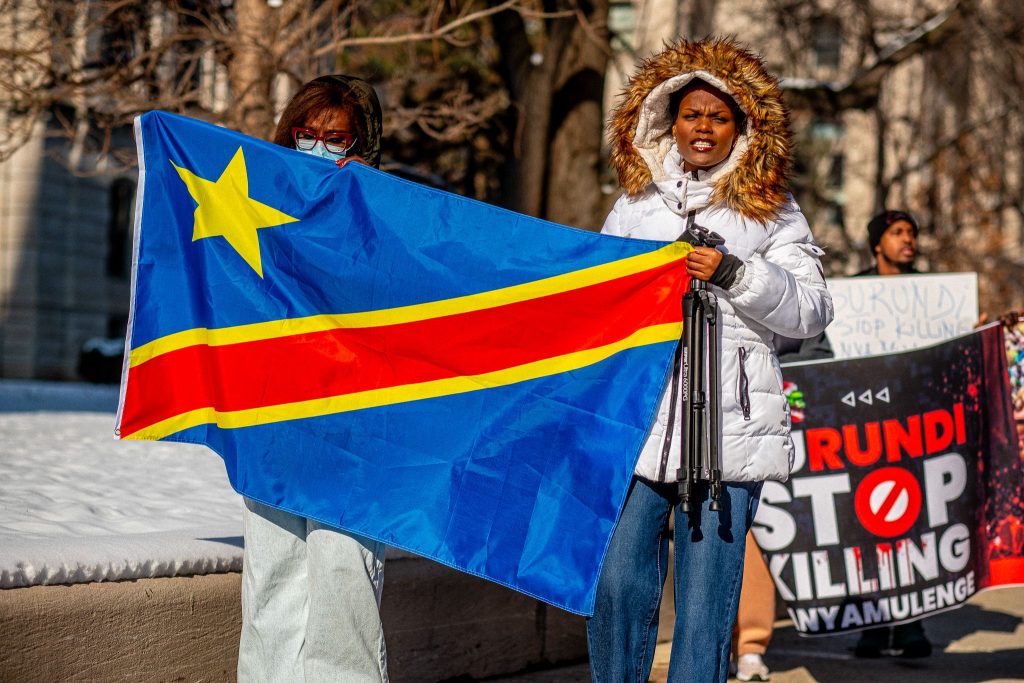
On December 9, the streets of Portland were filled with members of the Banyamulenge community, who braved freezing temperatures to protest the military blockade in Minembwe. Demonstrators carried signs listing recent instances of alleged kidnappings and killings by Burundian soldiers and Wazalendo militias. Children, teenagers, elderly men, and mothers joined together in a unified plea for U.S. intervention.
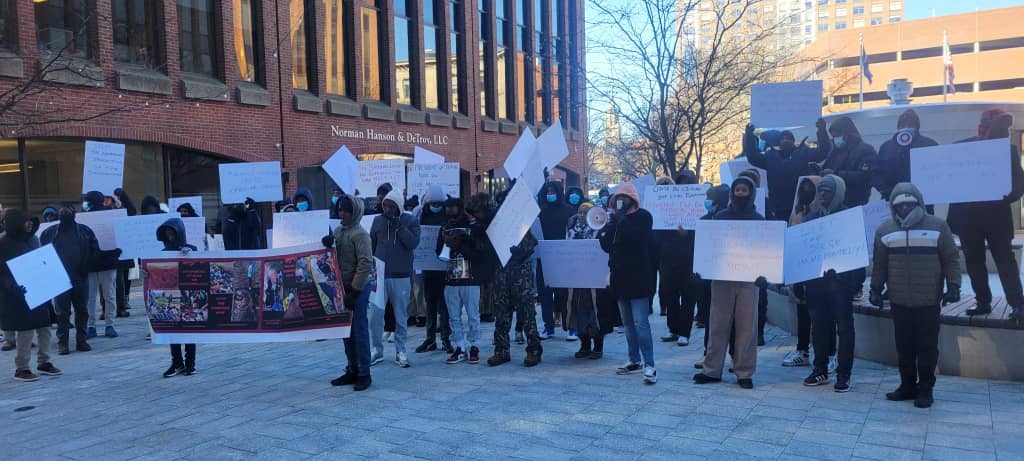
The protestors gathered in front of the offices of Senator Susan Collins and Congresswoman Chellie Pingree. Where Claude Rwaganje, one of the organizers, spoke to the crowd.
“We cannot sleep when our families are being killed. The Banyamulenge are human beings. We are here as your constituents, and we need your help. We are not second-hand citizens.”
Delegations in Portland and other cities were received by the chiefs of staff of elected officials, who accepted memoranda outlining the community’s demands and pledged to relay their messages to Washington policymakers.
Laurent Mwungura, a member of the Banyamulenge community in Indiana, addressed protestors there.
“The world must act, now! Not tomorrow, not next week, but today. We are the voices of those who cannot speak because they are trapped, hungry, and facing death.”
These protests represent one of the largest coordinated mobilizations of the Banyamulenge diaspora in North America. Their message is simple but urgent: the humanitarian crisis in eastern Congo cannot be ignored.
Historical roots of the crisis
The Banyamulenge are a minority group in eastern DRC. Strained relations with other local tribes date back to colonial times, when Belgian authorities favored certain groups over others and sowed divisions between ethnic groups in the Great Lakes region of Africa. Since Independence, decades of marginalization, ethnic tensions, and regional geopolitics have exacerbated the vulnerability of the Banyamulenge, leaving them exposed to violence from militias and foreign intervention.
Siege in Minembwe
ADVERTISEMENT

Douglas Gasore Kabunda, President of the Mahoro Peace Association, gave an exclusive interview to Amjambo Africa detailing the humanitarian blockade:
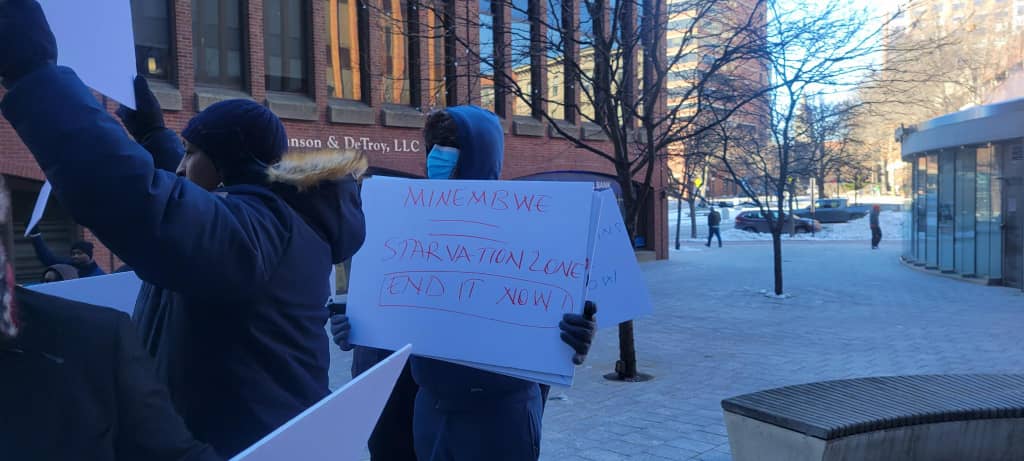
“They blockaded all the villages where Banyamulenge live and cut off all supplies. It has been more than two months without freedom of movement. You cannot move from one village to another to buy food. This is a deliberate military blockade aimed at suffocating the Banyamulenge community.”
Kabunda described how residents rely on local markets for food. With roads blocked, prices have skyrocketed, forcing families to skip meals, sell livestock, or consume seed crops meant for planting.
“The situation is catastrophic,” he said.
Military presence and alliances in Eastern Congo
The crisis in Minembwe is inseparable from the broader regional conflict. Reactivated in 2021, the armed rebel group M23 is part of the Congo River Alliance (AFC), led by Corneille Nangaa, former president of the Independent National Electoral Commission (CENI), which advocates for a federal state in the DRC. The M23 controls several provincial cities in North and South Kivu, including strategically important mining areas.
In South Kivu, M23 has a key ally in Twirwaneho, a self-defense group composed primarily of Banyamulenge combatants. Together, they have strengthened the rebel presence in the region, influencing local dynamics and security calculations.
Kinshasa accuses Rwanda of supporting M23, allegations Kigali firmly denies. Meanwhile, United Nations experts—considered “imposters” by Rwanda—have confirmed that Kigali has deployed more than 6,000 soldiers to assist M23. At the same time, Democratic Forces for the Liberation of Rwanda (FDLR), a Rwandan Hutu armed group implicated in the 1994 Genocide against the Tutsi in Rwanda, is accused of operating with backing from the DRC and Burundi. RED-Tabara, a Burundian-armed group opposing the Gitega government, is also active in South Kivu.
A U.S.=mediated peace agreement between Rwanda and the DRC, signed in Washington on December 4, called for the disarmament of the adversaries. Burundian President Évariste Ndayishimiye attended the signing. President Félix Tshisekedi of DRC described the FDLR fighters as: “A residual force reduced to banditry.”
Since 2023, Burundi has deployed more than 10,000 troops to support the FARDC and Wazalendo militias, actions that have sparked accusations of collective punishment against Banyamulenge civilians.
The fall of Uvira and shifting frontlines
On the same day as the Portland demonstrations, M23 rebels seized Uvira, a strategic city in eastern DRC, just kilometers from Burundi’s economic capital, Bujumbura, where UN agencies and the central administration are located.
A journalist based in Uvira, speaking on condition of anonymity, told Amjambo Africa, “Many Burundian soldiers will be obliged to retreat.”
The seizure of Uvira highlights the growing influence of M23 and Twirwaneho in South Kivu, and indicates that the local balance of power is shifting and affecting the operations of Burundian forces in Minembwe.
Regional responses and diplomatic tensions
President Paul Kagame of Rwanda has accused Burundian troops—more than 20,000 deployed in the DRC—of killing civilians using drones and artillery. President Évariste Ndayishimiye of Burundi, in turn, has accused Kagame of “destabilizing the region.”
Burundi maintains that its intervention is aimed at RED Tabara, and aimed at securing borders. President Ndayishimiye has described the military action as a “duty of regional solidarity” and a contribution to regional stability.
Meanwhile Kagame says, “People never ceased to call for help, but there was none to help them. The DRC bears its share of responsibility in this crisis, just like Burundi and Rwanda. The pursuit of peace in the region requires a shared commitment and collective responsibility from all the actors involved.”
Brigadier General Gaspard Baratuza, spokesperson for the Burundian army, confirmed that the siege is impacting Banyamulenge civilians, who can’t move between villages. Baratuza has claimed that if they were allowed to pass, civilians would “buy food for the enemy.”
Kabunda countered: “There is no justification for starvation. No agreement with Congo authorizes crimes against civilians. Whatever Burundi is fighting does not explain why Banyamulenge villages are blockaded.”
Central demands of the diaspora
The Mahoro Peace Association has outlined four central demands:
1. Immediate lifting of the blockade to allow movement of people and access to food.
2. Full withdrawal of Burundian forces from non-combat zones and Banyamulenge villages.
3. Independent, international investigation into alleged war crimes and the humanitarian blockade.
4. Targeted sanctions against political and military leaders in Burundi and the DRC.
“There is no case in the world where starving civilians is justified. This is a war crime. And the international community must treat it as such,” Kabunda stressed.
The humanitarian crisis affecting the Banyamulenge in Minembwe is inseparable from the larger regional conflict involving M23, Twirwaneho, FDLR, RED-Tabara, and the interventions of Burundi, Rwanda, and the DRC. With tens of thousands of diaspora members mobilizing in North America and the strategic seizure of Uvira by M23, the situation remains volatile.
Through organized advocacy and public demonstrations, the Mahoro Peace Association is keeping the spotlight on the human cost of these geopolitical struggles, demanding urgent action before more lives are lost.








