By Elias Taye, Amjambo Africa
An April 24 deadline is fast approaching for public comments on a proposed U.S. rule that could significantly restrict access to work permits for asylum seekers, prompting urgent warnings from legal experts and advocacy groups.
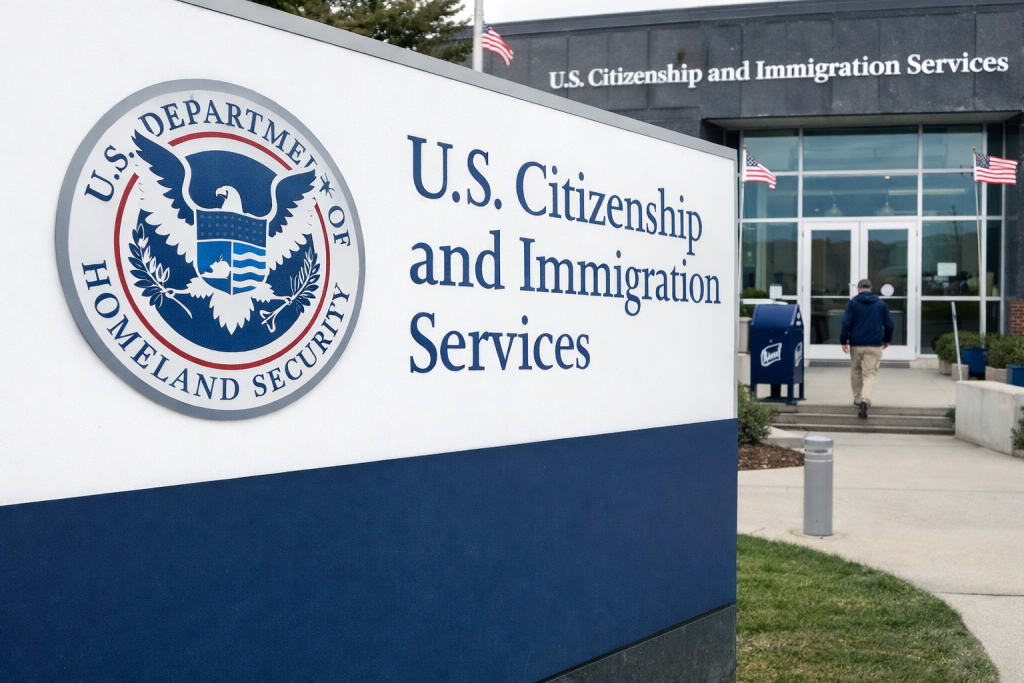
The proposal, introduced by the U.S. Citizenship and Immigration Services under the Department of Homeland Security, would tighten eligibility for employment authorization documents (EADs), potentially leaving many asylum applicants unable to work legally while their cases are pending.
At the same time, organizations such as the Maine Immigrants’ Rights Coalition are urging individuals, employers, and community groups to take action before the deadline by submitting public comments and signing petitions opposing the rule.
“This proposed rule change… will cause many asylum seekers to lose, or fail to obtain, work permits,” the coalition said in an advocacy alert on April 20, warning of broader consequences for families, communities, and local economies.
Who Could Lose Access to Work Permits
Mulualem Adgeh, an immigration attorney at Mulu Law LLC, says the proposed rule could exclude a wide range of asylum seekers from obtaining work authorization.
“The proposed rule will cut a multiple number of asylum applicants from getting a work permit,” Adgeh told Amjambo Africa.
According to Adgeh, the rule introduces several mechanisms that would disqualify applicants. These include individuals who file incomplete applications, those who apply for asylum more than one year after entering the United States, and applicants with certain criminal backgrounds or other disqualifying factors. It could also affect those who receive adverse decisions, or whose cases immigration authorities believe are unlikely to succeed.
In addition, the proposal would bar individuals who entered the U.S. without documentation from receiving work permits until their asylum cases are fully approved, a process that can take years.

Another provision would allow immigration authorities to pause work permit processing entirely if asylum cases are not resolved within an average of 180 days.
The ripple effects, Adgeh said, would extend beyond individual applicants.
“Not only applicants will bear the consequence, but businesses and families will carry an enormous economic burden,” he said.
ADVERTISEMENT

Local Economic Impact and Advocacy Response
Advocates in Maine say those economic consequences are already clear.
The Maine Immigrants’ Rights Coalition notes that Maine’s economy depends in part on the successful integration of immigrant communities, including asylum seekers who fill critical labor shortages.
Delays or denials of work authorization, the coalition warns, could undermine workforce development in key sectors, increase reliance on municipal support systems such as General Assistance, and create barriers to self-sufficiency for people legally allowed to remain in the U.S.
The group is encouraging employers to submit individualized comments describing how the rule would affect their businesses, emphasizing that real-world examples carry weight in the federal review process.
Real-Life Consequences: Dependency and Risk
Beyond policy language, the proposed rule raises serious concerns about day-to-day survival.
“If people are denied EAD, that means they will be dependent on others to support themselves or work without authorization,” Adgeh explained.
In the first scenario, he said, the burden shifts to individuals and families, often immigrants themselves, who provide housing, food, and basic needs.
“We are punishing kindness,” Adgeh said. “We are punishing people who support those in need by making asylum seekers permanently out of the job market and making them dependent.”
He warned that forced dependency can lead to deeper social challenges, including mental health strain and increased vulnerability.
“When people are not working, their mind and body are not functioning as they should,” he said. “This creates conditions where individuals may become vulnerable to harmful influences.”
At the same time, some asylum seekers may turn to unauthorized work to survive, creating additional complications.
According to Adgeh, this can lead to wage suppression, exploitation, and reduced tax contributions, while also making it harder for legally authorized workers to compete.
“The economy is not getting the fruit of their work,” he said. “Instead, we are creating a system where people are excluded from contributing.”
Legal Uncertainty and Broader Debate
The proposal, formally titled “Employment Authorization Reform for Asylum Applicants,” was published in February by the Department of Homeland Security as part of the federal rulemaking process.
Advocates say one of its most controversial aspects is the potential to halt processing of initial work permit applications until asylum cases are resolved within an average of six months—a timeline that has not been met in years. Recent processing times have averaged between 22 and 35 months, raising concerns that the pause could last indefinitely.
Additional provisions would increase the waiting period for work authorization from five months to one year, add new requirements for renewing existing permits, and expand discretionary authority for immigration officers to deny applications
Despite these concerns, the future of the rule remains uncertain.
“It is hard to predict what is going to happen at the end,” Adgeh said, noting that legal challenges are likely if the rule is finalized.
He questioned the legal reasoning behind the proposal, particularly the idea that work permits serve primarily as an “incentive” for asylum seekers.
“Working is a human right and part of the protection of asylum,” he said. “It is wrong to consider it only as an incentive.”
Adgeh added that courts may be skeptical of efforts to separate work authorization from the broader protections asylum is meant to provide, though the outcome could ultimately depend on higher courts, including the Supreme Court of the United States.
What Comes Next
For now, the proposal remains under review, with the public comment period set to close on April 24.
Advocates and legal experts alike are urging communities to engage before the deadline, whether by submitting comments, supporting advocacy efforts, or staying informed.
“America is great for multiple reasons, but one of its pillars is immigration,” Adgeh said. “Most amazing people in America came here under asylum protection.”
For immigrant communities already navigating emotional and physical challenges, the stakes are high. The outcome of this proposal could shape not only immigration policy, but also the everyday realities of thousands seeking safety, stability, and a chance to rebuild their lives.