By Amjambo Africa Staff
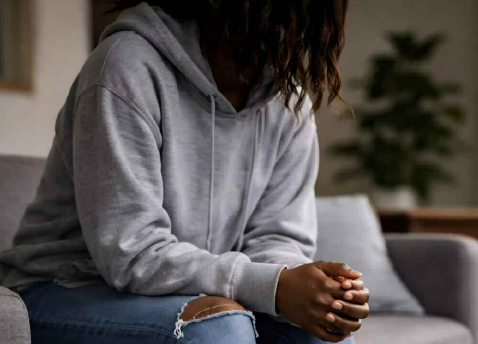
When we visited Gihozo, a pseudonym for a Congolese woman in her thirties who has lived in the United States for four years, we were struck by the depth in her eyes— heavy with emotion. Though she was physically present, a part of her still seemed imprisoned by her past. She bravely chose to tell us her story.
It all began one evening in a parking lot, when she noticed a black car passing by and then returning, which made her uneasy. After waiting a few minutes, she decided to leave. But as she stepped out, she saw a car following her with its headlights off. Just ahead, a woman screamed that she had just been arrested by ICE. It was in that moment Gihozo realized she was in danger. She tried to accelerate, but the car behind her honked loudly. She knew there was no way out. The agents approached her and identified themselves, but already knew who she was. They knew everything: her tourist visa, her entry through Illinois, and more. She did not resist, cooperating immediately. The agents even told her they appreciated her attitude.
She got into their vehicle and they drove for about two hours, with no information about where she was being taken. The driver seemed lost, which only heightened her anxiety. “He drove as if he didn’t know where he was going,” she recalled. At one point, she asked for a bathroom break and the agents initially refused, but she insisted and eventually got their approval. During the ride, they picked up other detainees and they ended up with four or five in the vehicle.
In Scarborough, detainees were handcuffed—hands, feet, and waist. At the detention center, the handcuffs were removed, they were photographed, frisked, and processed.
ADVERTISEMENT

At that moment, Gihozo felt completely lost. She had no lawyer. Another woman detained whispered a vital piece of advice: call Patrick Mulonda, the president of the Congolese community, who had helped many people detained by ICE. With Mulonda’s assistance, she managed to reach a lawyer who began handling her case. She was told a transfer is scheduled for 4 p.m. One woman was released after making her call, while the others were sent to Boston.
Every time the detainees were moved, the handcuffs were shackled so tightly that walking was painful. In Boston, they were frisked again and packed into a room too small to sleep in. The air was heavy, almost suffocating, and conditions were deplorable. Nothing was given without asking; one must knock and insist to receive even the basics. One day, detainees were told there would be no shower.
On the second day, she was called to discuss her case. An agent presented documents in English and asked her to sign. She learned she was only allowed to stay in the U.S. for one month, not three, as she had believed. She refused to sign without understanding the documents and asked for a lawyer, but was told a decision had already been made.
Thanks to Mulonda’s help, a lawyer began working on her case. One evening while her fingerprints were being taken, she realized a transfer was imminent and managed to alert her attorney that she may be sent far away.
The next morning, very early, without having eaten or showered for several days, a number of detainees were handcuffed and taken to the airport. They boarded still in handcuffs, along with a few African women—an Angolan and a Haitian—among a majority of people from South America. A majority of detainees were sent to Louisiana.
Upon arrival, they were placed in a holding room with people awaiting deportation to Colombia, Mexico, or Venezuela. Panic gripped her. She protested, explaining that she was from Congo and could not be sent elsewhere. No clear answer was given.
Later, she was transferred to a detention center in Louisiana and told cases are not handled there and she must continue waiting. There were no clean clothes and no showers for more than two and a half days. Medical examiners conducted tests, including one for tuberculosis.
Then came another transfer, this time to Texas. During the journey, the treatment seemed slightly better. But upon arrival, agents announced that everyone present would be deported. Panic returned. The next day, all the names were called except hers and that of another African woman. They were told the facility only housed people with final deportation orders, meaning she must be moved again.
In the new facility, the air conditioning was freezing. Detainees knocked on the doors to ask for jackets and blankets. The place resembled a prison, and phone calls were very limited. Despite the distance, her hearing remained scheduled in Boston. Thanks to Mulonda and a partner organization, she had legal representation and counsel was able to gather evidence, negotiate with the judge, and get an immigration bond granted without Gihozo appearing in person. Her lawyer argued she was in too fragile an emotional state.
Mulonda and his assisting organization paid her bond, and she waited anxiously for her release. Days passed without explanation. Finally, one morning around five o’clock, she was awakened and given back her old clothes, still dirty from before. But before leaving for good, she was transferred again to another facility. At one point, agents explained that even after her release she would not immediately be allowed to work, drive, or return to a normal life. They did not say how long these restrictions would last. The news devastated her. She thought she was finally free, only to realize that the restrictions would continue.
In another center, she was asked to sign a document agreeing to wear an electronic ankle bracelet. She hesitated, not fully understanding what it meant. A senior agent warned that if she refused, she would be sent back to detention. Under pressure, she signed. The bracelet was attached to her ankle. She cried, feeling humiliated and treated like a criminal.
Finally, she was dropped off at a bus station. Only then did she recover her phone and manage to contact her loved ones.
Today, she still has trouble sleeping. The memories of the handcuffs, the endless transfers, the deportation announcements, the freezing cold, and the ankle bracelet still haunt her. She is physically free, but inside still fights to escape the nightmares of detention that linger.