
By Eloge Willy Kaneza
Exclusive interview with Onesphore Sematumba, Senior Analyst at International Crisis Group (Great Lakes Region)
The eastern provinces of the Democratic Republic of Congo (DR Congo) are among the most volatile and complex areas in the Great Lakes region of Africa. For decades, this part of DR Congo has been caught in recurring cycles of violence fueled by ethnic rivalries, competition over natural resources, and interference from neighboring countries.
Today, according to Congolese political analyst Onesphore Sematumba, Senior Analyst at the International Crisis Group covering the Great Lakes region, the government’s increasing reliance on pro-government militias – particularly the so-called Wazalendo – is exacerbating instability and risking a full-blown regional crisis.
In an exclusive interview with Amjambo Africa, Sematumba explained the rise of the Wazalendo and delivered a sobering assessment: the Congolese state is outsourcing its authority to armed groups and foreign powers, and the consequences could be catastrophic.
“Burundi involvement in helping the Congolese army, FARDC, and the militias supported by Kinshasa creates … a cocktail that’s not good at all,” Sematumba said. “Ugandan forces are in the northern part of North Kivu and in neighboring Ituri to fight against the ADF, a terror group of Ugandan origin.” ADF is the Allied Democratic Forces, a Uganda rebel group.
Rise of the Wazalendo
The term Wazalendo, meaning “patriots” in Swahili, refers to a loose coalition of local self-defense groups and militias that the Congolese government has increasingly relied upon in its fight against armed groups such as M23. On paper, these militias represent grassroots protection of communities. In reality, Sematumba warns, they are a dangerous normalization of paramilitary authority, filling the gaps left by weak state institutions.
In Congo, militias are taking over roles that should belong to state forces. They have supplanted the army and police in some areas. “When the state relies on militias to do its work, it signals weakness, not strength,” Sematumba explained.
The roots of this crisis originated in November 2021, when renewed rebellion in eastern Congo exposed the inefficiency of the Forces d’Armees de la Republique Democratique du Congo, or FARDC. By April 2022, vast territories had fallen under rebel control. In response, Kinshasa turned to regional actors through the East African Community (EAC), engaging in two parallel initiatives: political dialogue with armed groups, including M23, and diplomatic normalization with Rwanda via the Luanda process led by Angola.
“Two days after the start of the dialogue between Kinshasa and the militias, the government excluded M23 from talks, accusing them of continuing military attacks,” Sematumba noted. “Yet they continued engaging friendly militias, aiming to integrate them into [Disarmament, Demobilization, and Reintegration] processes. M23 kept advancing, and all pro-government militias remobilized.”
M23 and the regional dimension
The M23, a Tutsi-led rebel group, has seized control of large areas in North Kivu and South Kivu provinces and maintained authority over their respective provincial capitals since early 2025. Despite Rwanda’s denials, a 2024 U.N. report estimated that up to 4,000 Rwandan troops were active inside the DRC. In a notable policy shift, the U.S. State Department officially designated M23 as a Rwanda-backed force in 2024 and urged Rwanda to withdraw all its forces and missile systems from Congolese territory.
Rwanda maintains that its actions are defensive, citing persistent threats from the Forces Democratiques De Liberation Du Rwanda or FDLR, a militia group descended from perpetrators of the 1994 Genocide Against the Tutsi in Rwanda. The M23 advance and the weakness of the Congolese army led Kinshasa to tolerate militias and collaborate with them, despite the danger they represent and the insecurity they cause. Some militias emerged in North Kivu while others arose in South Kivu.
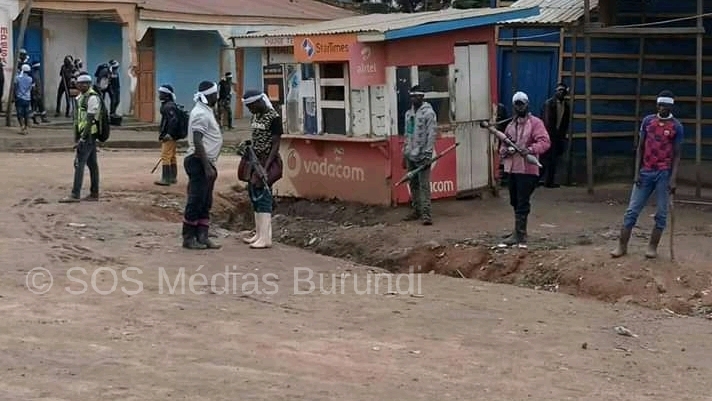
Photo: CODECO militia members in Ituri province, eastern Congo, in a center abandoned by residents following armed violence
ADVERTISEMENT

Over time, militias such as Patriotic Alliance for a Free and Independent Congo or APCLS (Hunde), Nduma Defence of Congo (NDC), and various Nyatura factions (Hutu) emerged. By the end of 2023, many of these groups were officially legitimized by Kinshasa and collectively referred to as the Wazalendo.
“The Wazalendo are not a single group but a heterogeneous conglomerate, initially federated by government incentives,” Sematumba said. “After military defeats, especially in Goma, they took control of local areas, often turning against the very army that armed them.”
Uvira: siege of state authority
Nowhere is the collapse of state authority more visible than in Uvira, a city in South Kivu just kilometers from Burundi’s capital, Bujumbura. There, Wazalendo militias refused the appointment of General Olivier Gasita, a Munyamulenge officer, as deputy commander of the 33rd military region – an ethnic refusal rooted in local bias.
“Being Tutsi, Munyamulenge, is perceived as Rwandan. The Wazalendo there do not want him. The army may appoint someone, but if local militias and society oppose, the government must retrocede. They had to exfiltrate General Gasita,” Sematumba said.
FARDC forces in Uvira are often sidelined, with militias controlling schools, governance, and access to basic services. Tutsi and Munyamulenge civilians face systematic exclusion, with women unable even to fetch water in some areas.
“We are now in a lawless situation, where militias impose terror while M23’s presence looms nearby,” Sematumba said.
Regional complications
Burundi’s role in supporting FARDC operations, along with foreign troop deployments from Uganda, further complicates the security landscape. Sematumba stresses that these external forces often serve interests other than local protection.
“The presence of foreign troops is a threat to peace in itself. It’s not for the beauty of the Congolese or the Congolese population. People in Uvira have been molested under the nose of the Burundian army,” he said.
In September 2025, Wazalendo militias refused entry to Congolese territory for refugees expelled from Burundi, highlighting both institutional absence and militia autonomy.
“This is characteristic of a state no longer able to control its population or territory. Even the governor and provincial authorities hide in Bujumbura out of fear. Anything can happen at any time,” Sematumba warned.
Subcontracting sovereignty
The Congolese government’s reliance on militias, foreign troops, and regional blocs like EAC and the Southern African Development Community (SADC) has created a state of subcontracted sovereignty. Instead of maintaining a monopoly on force, Kinshasa has delegated authority to multiple actors with competing agendas.
“You arm people with no training, no hierarchy. How does the government count on getting rid of them? Even after the war, there is no clear exit plan. The Wazalendo have turned into a monster that self-manages, controlling borders, security, schools, essentially filling the vacuum left by the state,” Sematumba said.
According to Sematumba, the consequences are severe. The rejection of General Olivier Gasita, alongside ethnic targeting of Tutsi and Munyamulenge populations, demonstrates the fragility of Congolese institutions.
Sematumba drew chilling parallels to the 1990s. “It reminds me of the darkest hours in Rwanda. Today, Tutsis and those perceived as Tutsis in Uvira cannot even access basic services. Authorities remain passive.”
The human cost
Millions of civilians in eastern Congo live under constant threat of violence, displacement, and deprivation. Camps in Goma, Bukavu, and Ituri are overcrowded, while humanitarian agencies warn of worsening hunger and disease.
“The menace of death, especially in the east, is constant. To continue observing without denouncing, without acting, is non-assistance to persons in danger. And today, in the 21st century, we don’t even have the alibi of ignorance. Everyone knows what is happening. We have no excuse,” Sematumba emphasized.
Communities are caught in a grey zone where militias are both protectors and predators. While some locals see Wazalendo as defenders, others accuse them of extortion, arbitrary justice, and abuse.
Insufficient international response
Despite widespread reporting and declarations in Nairobi, Doha, Washington, and Addis Ababa, little has changed on the ground. Sematumba criticizes the international community for failing to confront regional powers, enabling continued exploitation of Congolese territory.
“A small flame risks blowing up all the mess. We are on the brink of sub-regional implosion,” he said.
The way forward
Sematumba’s message is blunt: Congolese authorities must reclaim control, regional powers must cease support for proxy groups, and humanitarian action must be scaled up.
“I will tell them: you have no excuse. The government is the first and foremost responsible for the safety of its citizens. To continue as we are is to abandon the population. This is not only dangerous, it is criminal,” he said.
Rebuilding professional Congolese forces, curtailing militia influence, and pressuring regional actors to respect Congo’s sovereignty are urgent steps. Without them, eastern Congo risks further descent into chaos.
The eastern DRC is often described as the world’s “longest-running humanitarian crisis.” Today, with the proliferation of Wazalendo militias and outsourcing of sovereignty to foreign powers, the situation threatens to worsen.
Sematumba’s warning is stark: “You don’t have an excuse. Not anymore.”
……………….
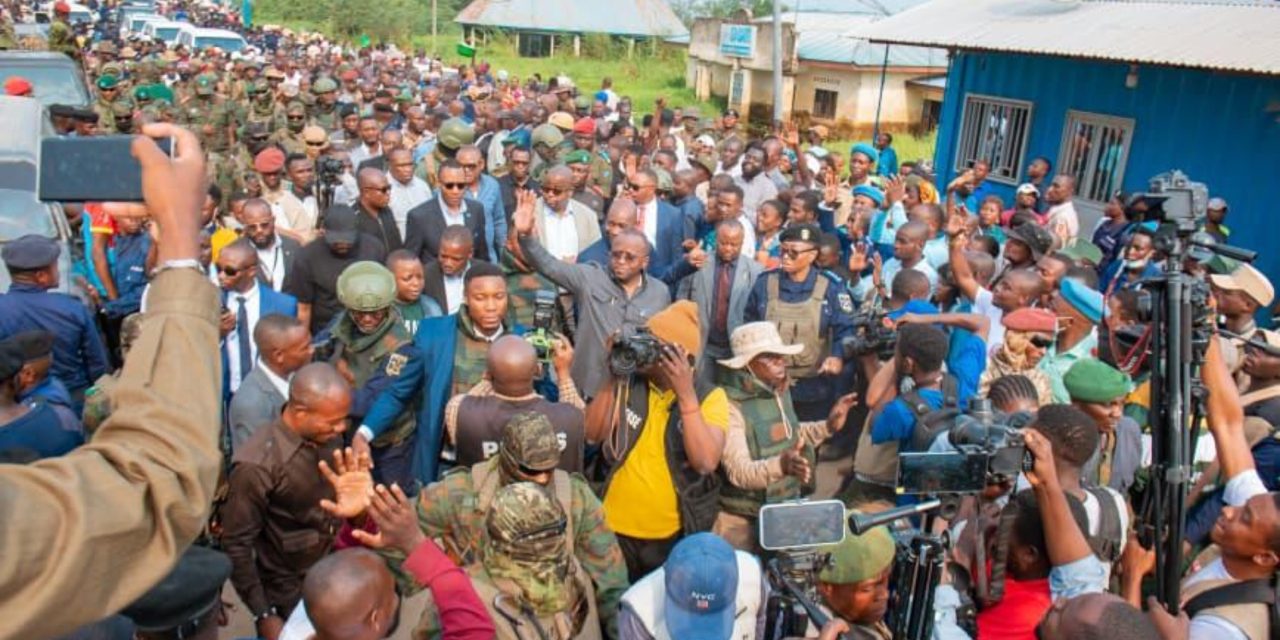
Photo: Deputy Prime Minister Jacquemain Shabani Lukoo arrives in Uvira on September 11, escorted by Burundian and Congolese soldiers as well as Wazalendo militia







