By Patrick Nduwimana
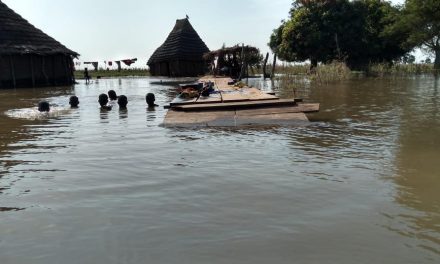
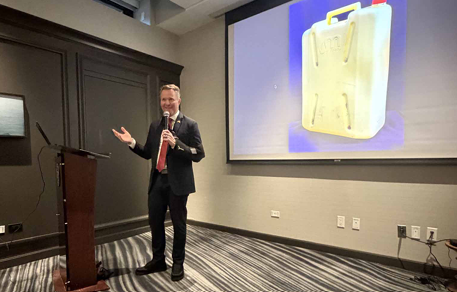
With only $15, you can help one child gain access to clean and healthy water for 25 years, and with $200, you can prevent a Burundian child from dying from a waterborne disease. This was the story told during a September 26, 2026 event in Portland, Maine. Burundians attended a presentation by the CEO of Amazi Water, a nonprofit organization supplying clean water for free to an estimated 3 million people in Burundi. An East African nation of approximately 14.5 million people, Burundi is ranked as the poorest country on the planet.
Steve Bijoga, a Burundian based in Lewiston who hosted the event, was touched by the amazing work done by Amazi Water. He decided to take the lead in mobilizing the Burundian diaspora in Maine to donate so that communities back home can have access to clean water close to their homes. His ambition is rooted in his personal experience.
“Every year through primary school, I spent long stretches at my grandfather’s house,” Bijoga said. “For years, our water came from a neighbor’s tap until the day the household was finally connected to Regideso, the country’s sole water and electricity utility.
“For us kids, fetching water had almost been a game; we would run, carry jerrycans, and meet other children along the way. But for the kids who walked more than a mile for every drop, the game gave way to exhaustion and to the daily pressure of getting water home in time for cooking and chores.
“Some of them missed school. A few I knew dropped out of primary school altogether, simply because there was too little water at home, or none at all, so their job became getting water for the family. That is why Amazi Water means so much to me. Clean water close to home isn’t only about health; it’s about a child’s chance to stay in school, to thrive, and to imagine a different future.”
ADVERTISEMENT

According to recent data from the World Health Organization andUNICEF, 62% of the population in Burundi has basic drinking water access. Clean water is significantly scarcer in mountainous and rural areas, and chronic water shortages continue around the economic capital city, Bujumbura.
Jason Peters, CEO of Amazi Water, says that only 46%of Burundians have access to clean water. That situation leaves more than half of the population living without it, and potentially suffering from diseases linked to contaminated water.
In a meeting with the Burundian diaspora in Maine, Peters said Amazi Water has three initiatives to complete between September and December 2026. Through solar-powered pumping systems, the three initiatives will bring reliable, clean water access to a total of 15,000 people, transforming daily life across their communities and beyond. The three water supply projects will require $204,000 to complete.
For Bijoga, this goal is doable.
“That was part of the reason why I wanted Jason Peters to come to Portland — so that he can inspire us, so that he can show us how doable that situation is, how doable providing water to families can be,” Bijoga told Amjambo Africa. “Because he explained to us that for $15, you provide water to an individual for 25 years. So, for me, I think it’s doable.
“Actually, through Amazi Water, we can continue that legacy of what they have been doing already for 14 years and keep it going long-term, make it sustainable, and I think hopefully we are going to achieve that with the connection with Amazi Water.”
Cassius Shirambere, former leader of the Burundian Community Association of Maine (BCAM), said Amazi Water’s short-term goal can be achieved, considering the high number of Burundians living in Maine.
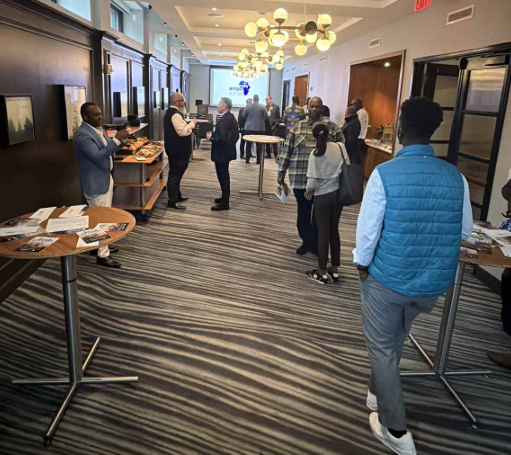
“The example we heard from the Amazi Water CEO that with only $15, one child can drink clean water for 25 years, that’s a really specific example to show how a little money, like $1,500, can make a change for a big family, for a community,” he said. “Here in Maine, we are over 1,000 people; we can make a contribution to provide clean water in areas where people don’t have it. That could be a huge and positive change for our community back home.”
Many still believe that providing clean water to people is the government’s job, but Shirambere disagrees with that mindset.
“I don’t agree with that. In Burundi, we just have one government company supplying water and electricity,” he said. “I was there in August this year and witnessed myself how people are still struggling to have water and electricity due to power shortages. This proves that the government is incapable of providing water to all people. So, with small contributions to the Amazi Water project, we can make a difference and solve this recurring problem.”
Shirambere said it will be remarkable if Burundians living in the United States join together and work alongside the government to fill the gap in clean water access in their country.
“I know sometimes the government considers the Burundian diaspora as its enemy; this is wrong,” he noted. “It will be good for the diaspora in Maine and elsewhere in the [United States to work together to prove to the government that we are part of the solution. We are here to support our country. We do have brothers and sisters who still don’t have access to clean water. We can contribute positively to make a change.”
Peters said Amazi Water’s vision moving forward is to deliver up to 20 liters of clean water per person per day, within a 20-minute walk from home, for 100% of the communities in Burundi by 2030.